Editorial
An open archive of thoughts, opinion and inspirations. For further information contact mail@walescompany.com.
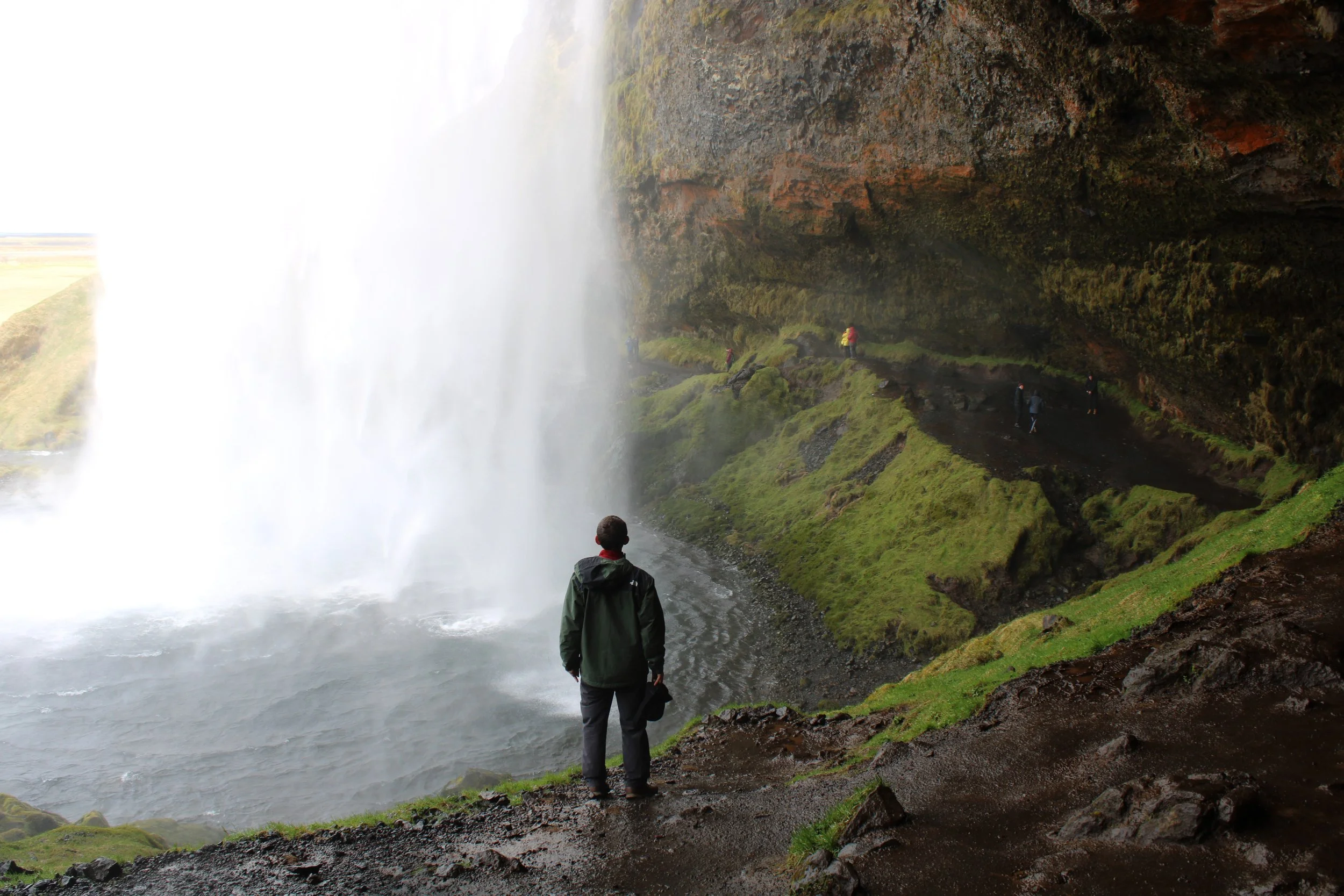
I think this is what we can learn to take indoors.
The accidental sculptures are the worn, historical architectural flourishes; the fully established Buddleia you might not have chosen for the garden; or the beaten-up brass jug you don’t want to get rid of because your grandma gave it to you for no reason, but you like the shape. Any new additions, whether reclaimed or first ownership, are tools that allow us to enjoy our spaces while fulfilling a need. Experience should tell us when we have enough of a particular item, or when to avoid another piece of endorphin marketing. The outcome becomes a home curated for the present, rather than a live-in example of gradual decay.
If an item is unable to continually evolve, to accommodate ageing, to be sold or passed on while still serving its function, then indoors will never feel as good as the outdoors.
Indoors Should Feel As Good As The Outdoors - 02/05/2026
My love of the remote UK outdoors comes from its reminder of the entropy we live in every day and of the accidental sculptures that surround us.
A dry stone wall is a defining example of man-made accidental sculpture. Andy Goldsworthy may approach it esoterically, but it may mean something entirely different to the builder or landowner. Shaped over time by natural forces and made from solid stone, it allows a quiet harmony between material, maker and environment. A natural parallel is sphagnum moss, found only in water-rich, thriving moorland. Over time, it forms peat, the foundation of the landscape, while creating intricate and compelling forms.
When I venture to remote places to discover these sculptures, the items I take with me are guided by necessity and feel; experience determines the quantity. After acquiring the correct footwear, layered clothing that keeps me safe without irritating my skin, vessels for food and water, and a means of navigation, there is little else that a person or company can convince me I need for a day out. When your setup is spot on for you, in all seasons, previous problems disappear, opening up your capacity to think in the present.
Design by Reduction Sculpture - 21/04/2026
As a designer of furniture and lighting, part of me has always sought to reduce an idea to its essence. The reasons for this are that each piece carries a strong narrative, the design is in harmony with its material and function, reflects a responsibility in the use of resources, and is often more pleasing to the potential buyer. However, with so much exposure to different designs, these sentiments can easily become lost, and the boundaries between the essence of a design idea, the imprint of a sculpture, and marketing begin to blur.
In the world of industrial design, many objects exist because new technologies give us the ability to manipulate materials in ways that were previously impossible. This, in turn, provides companies with a compelling marketing narrative and the potential grail of being the first to manufacture something in a particular way. I recently saw a plywood chair that initially struck me as a well-resolved piece of design. It felt close to an essence: in harmony with its materials and method of production, and seemingly comfortable. However, the more I saw it, reflected on it, and observed others’ responses, the more it began to feel uneventful. It reminded me of moments in design history where object and environment have been disjointed, for example the invention and widespread use of plastic in furniture. It’s essence was effectively, marketing.
I wonder whether the same chair could be made from four pieces of timber, achieving a similar silhouette and function, yet expressing more of the designer’s intent than its industrialised counterpart? Does part of my previously stated confusion lie in the very terms “industrial” and “design” ? Do we really want to live in an industrial world? And do we truly understand what a designer does?
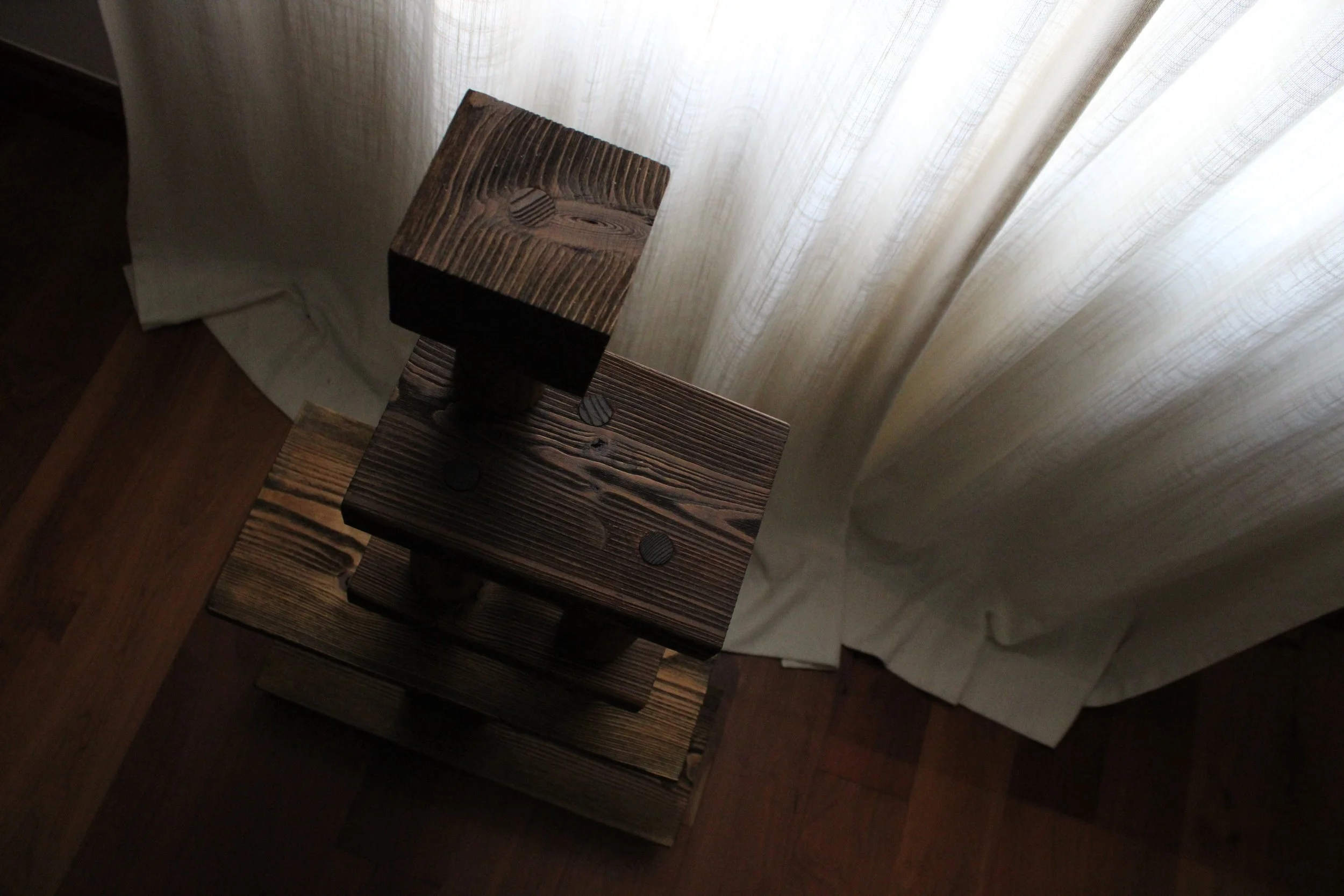
These thoughts led me to explore whether I could reduce form to just two elements and still find it pleasing. The results may seem insignificant and simplistic, but they do not attempt to sell a dream of something you could have. Instead, they exist to create feeling and shadow, and to remind us of the beauty of natural materials, something I consider to be sculpture.